PGDE vs BEd vs NCE for QTS: (one is NOT accepted)

The Nigeria Certificate of Education NCE for QTS is not accepted because it doesn’t meet the minimum Level 6 degree standard that UK requires.

Applying for direct QTS with a qualification that doesn’t meet the required level gets you automatic rejection, which can set your entire teacher relocation to UK back by months.
This guide breaks down how PGDE vs BEd vs NCE for QTS are compared under UK rules, so you know before spending a single naira on an application.
Quick highlights
- Only B.Ed meets the UK’s Level 6 bachelor’s degree standard without any upgrade.
- NCE and Grade II certificate are Level 4-5 credentials.
- A Nigerian PGDE is only accepted for UK QTS when paired with a Bachelor’s degree.
- The Nigerian PGDE and Scottish PGDE are different qualifications that can cause genuine confusion to UK employers.
In this post
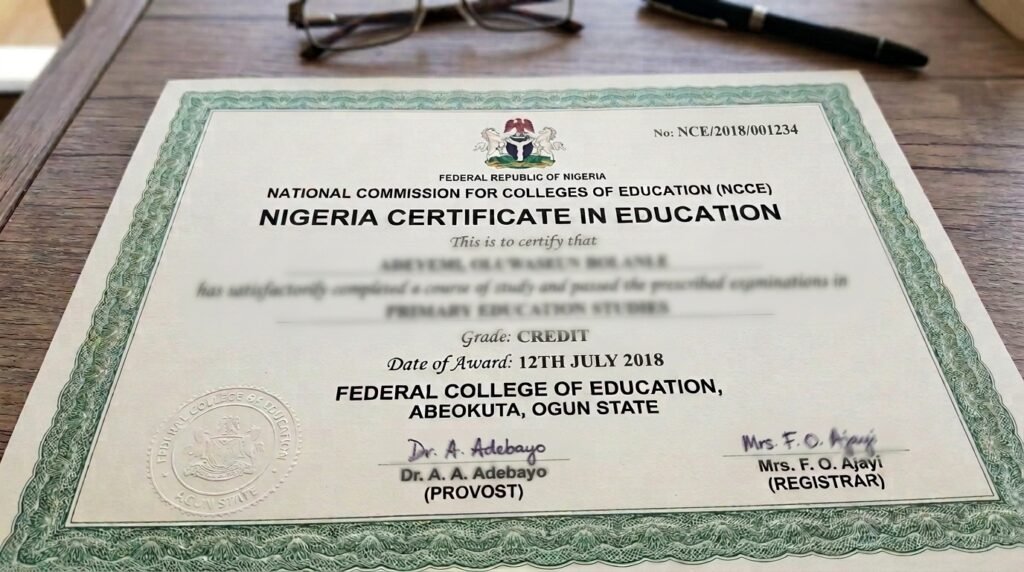
Nigeria Certificate of Education
NCE doesn’t match the UK standard of a full bachelor’s degree.
It’s comparable to a Level 4 or 5 credential, similar to a Diploma of Higher Education.
This sits below the Level 6 bachelor’s degree minimum that both the direct QTS route and iQTS require.
So, NCE or Teaching Grade II certificate holders do not meet the requirements for direct TRCN to QTS application.
If your highest qualification is NCE, the way forward is to get a Bachelor’s degree.
Understanding this NCE for QTS limitation saves you from wasting time.

Bachelor’s degree
A standard 3 to 4-year degree from a recognised Nigerian university is equivalent to UK Level 6 credential.
This makes Bachelor’s degree the clearest path in the entire BEd vs PGDE or NCE for QTS comparison.
Holding a subject specific degree, like in Maths, Physics or Other UK Shortage Subjects strengthens your application.
And if at least 50% of your degree courses is in a recognised shortage subject, you become eligible for the direct QTS route which prioritises STEM and languages.
Such degree holder is also more attractive to schools looking to sponsor a UK Skilled Worker Visa for Teachers, because the subject itself is what schools are short of.
This does not mean degrees in other fields outside STEM or language are worthless.
They still clear the Level 6 threshold and remain a solid for Qualified Teacher Status.
What changes with shortage subjects is the speed of finding a school willing to sponsor visa, not your basic eligibility UK visa in general.

Beware of PGDE
There are two different qualifications that share this acronym.
The Nigerian PGDE is a postgraduate course for graduates who already hold a non-education Bachelor’s degree and want to enter into teaching.
TRCN accepts this Qualification for Licensing but for QTS, it must be submitted with your non-education degree to UK ENIC.
Because it is your Bachelor’s degree that’s checked for the Level 6 equivalence, not the PGDE itself.
The UK and Scottish PGDE is a different qualification.
Postgraduate Diploma in Education is the standard initial teacher training program in Scotland, often not comparable to PGCE used in England.
Some English school administrators can mistake your Nigerian PGDE to this Scottish qualification, creating unnecessary confusion during hiring.
And can sometimes even delay your visa sponsorship discussions with an interested school.
To avoid this, always label yours as “PGDE (Nigeria)” on every application and attach your UK ENIC statement of comparability alongside.
How UK ENIC verifies Nigerian qualifications

The UK National Information Centre for global qualifications assesses international qualifications and confirms where they sit within the UK framework.
This verification matters for every category in the PGDE vs BEd vs NCE for QTS because it is what the Teaching Regulation Agency and most UK employers rely on.
To apply, upload your certificate and transcripts to UK ENIC portal, pay the fees and it returns a official Statement of Comparability confirming the UK equivalence of your qualification.
Your UK ENIC statement turns your Nigerian NCE, B.Ed or PGDE to something the TRA can use to process your Qualified Teacher Status.
UK ENIC assessments take time to process, so processing this early protects your UK Relocation timeline.
Starting it after you’ve found a sponsoring school puts unnecessary pressure on both you and the employer.
Qualification to pursue if you’re starting from scratch

If you hold only an NCE, go for a Bachelor’s degree since you can’t meet the Level 6 minimum without it no matter how many years of classroom experience.
If you already hold a B.Ed, suspend further study and apply for the direct TRCN to QTS conversion.
Or consider iQTS if you want to still train in Nigeria before Relocating to Teach in the UK.
And confirm that your degree is not in education before considering PGDE.
Comparison of NCE vs BEd vs PGDE
| Metric | NCE | B.Ed | PGDE (Nigerian, NTI/NOUN) |
|---|---|---|---|
| Academic tier | Level 4 to 5 | Level 6 | Level 7 |
| UK ENIC comparability | UK Diploma of Higher Education | UK Bachelor’s degree | UK Postgraduate diploma |
| TRCN category | Category C | Category B | Category B |
| Direct QTS eligibility | No, upgrade required | Yes, subject dependent | Yes, when paired with Bachelor’s degree |
| Duration | 3 years | 3-4 years | 1 year |
FAQs on B.Ed and PGDE and NCE for UK teaching

1. Is NCE completely useless for UK teaching?
No. While it does not qualify you for TRCN to QTS conversion, it can speed up your Bachelor’s degree via direct-entry to get you the Level 6 standard that UK requires.
2. Can I convert my Nigerian PGDE to UK QTS?
Yes, provided your PGDE has a Bachelor’s degree behind it. because PGDE alone doesn’t carry enough weight.
3. What is the fastest upgrade path from NCE to a UK recognised qualification?
Direct-entry into a Bachelor’s degree program, since it builds on your existing NCE training rather than starting your education over from scratch.
Conclusion
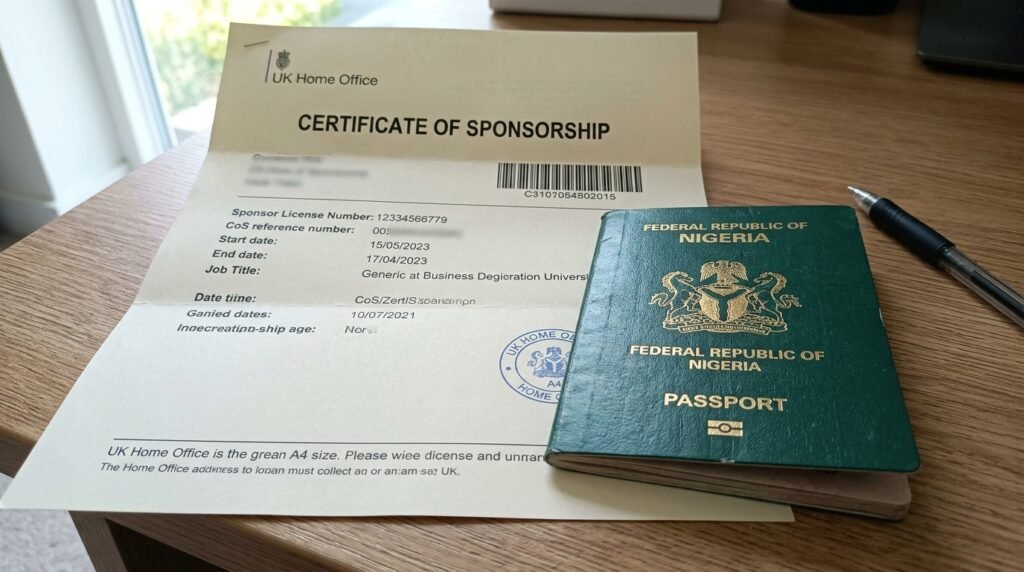
Once your qualification is confirmed at Level 6, your next step is to file your application for UK Qualified Teacher Status via DfE portal.
Then, request for your TRCN Letter of Professional Standing.
Get your QTS approved, secure a UK teaching job with visa sponsorship and off you go.
And if you’re already in the UK without QTS, see How to Get QTS in UK as a Nigerian Teacher Already There.
Can this help others? Share it. Got a question? Comment below.