2026 UK Teacher Shortage Subjects for QTS (Bursaries, Demand & Faster Routes)

Last updated on August 6th, 2026
Physics, Maths, Computing and Chemistry are the top-funded UK teacher shortage subjects for QTS in 2026/27.

Most UK teacher shortage subjects for QTS no longer qualify you for bursary or scholarship as an overseas-trained teacher and missing this can financially mess up your UK relocation plan.
This guide details which UK teacher shortage subjects for QTS carry funding in 2026, who can access it and the fastest Routes to Qualified Teacher Status for each one.
Quick highlights
- Physics recruitment has improved from 17% in the early 20s to 77% in 2025/26 with a forecast of 93% for 2026/27, all thanks to relocated teachers.
- Music remains under recruited at around 40% of target, but has no bursary.
- Non-UK trainees are now only eligible for bursary or scholarship if they qualify for UK student finance.
- The International Relocation Payment of £10,000 for Physics and Modern Foreign Languages (MFL) is closed.
- There’s an ongoing tax-free retention payments of £2,000 to over £5,000 a year for qualified teachers in STEM and languages at high need schools.
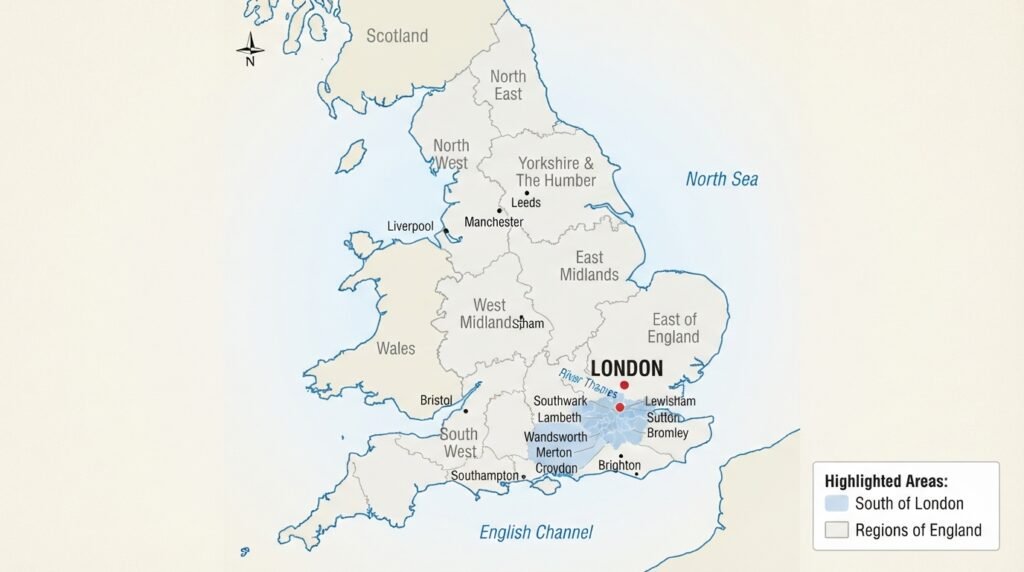
- Most affected teacher shortage regions are in the South of England outside London, not in the capital itself.
In this post
What counts as a shortage subject for QTS in the UK?
When a subject misses its recruitment target year after year, the DfE treats it as a priority.
And that priority status opens the door for overseas teachers to step into UK teacher shortage subjects for QTS that domestic recruitment alone can’t fill.
Matching your degree to one of these subjects reduces the hurdles of getting Qualified Teacher Status (QTS).
Full list of UK teacher shortage subjects in 2026
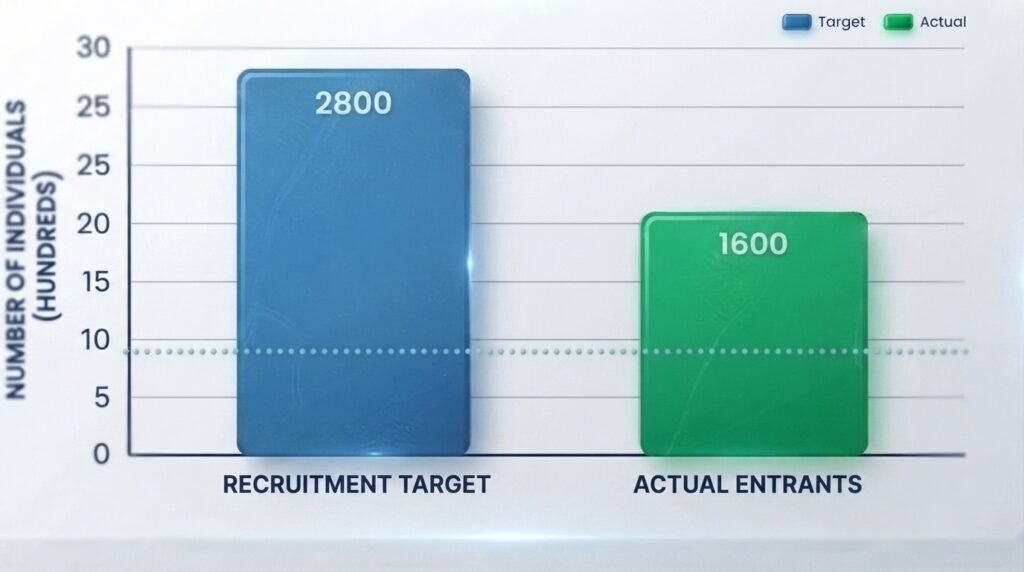
Physics used to be the most under recruited subject by a wide margin, filling as little as 17–30 percent of its target in early 2020s.
But recruitment has since improved up to 77% of target in 2025/26 and forecast to reach 93 percent for 2026/27.
This is due to the massive number of international teachers who relocated on that basis, now making up about 63% of total Physics ITT trainees.
Even Maths hit its recruitment target for the first time in more than a decade during 2025/26 and is predicted to get to 22 percent above target for 2026/27.
Chemistry has also improved, but Computing still sits below target despite recent gains.
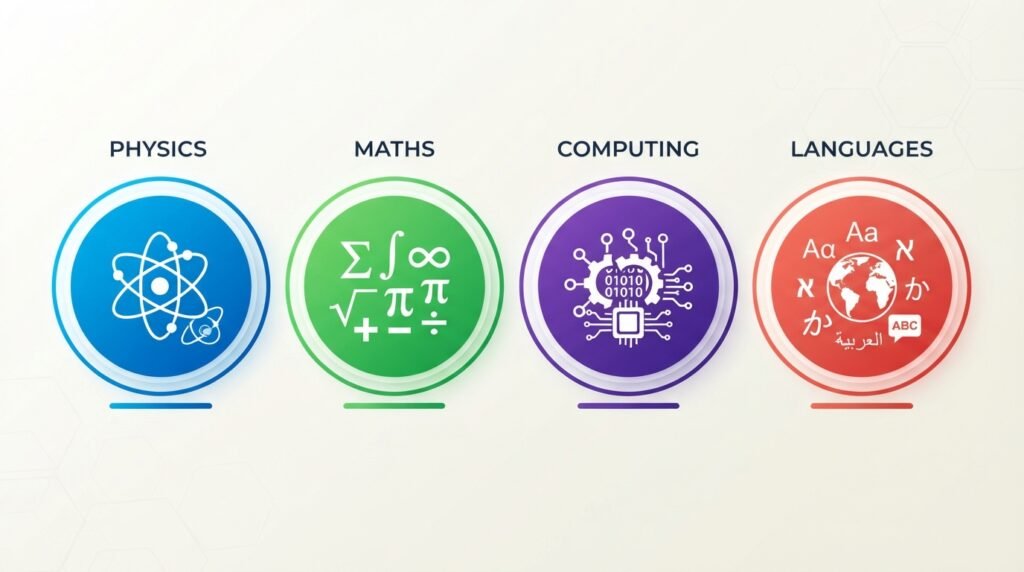
Nevertheless, DfE has kept Chemistry, Computing, Maths and Physics as the 2026/27 top funded UK teacher shortage subjects for QTS.
Because sustained recruitments (not just one good year) is what the bursaries and scholarship funding protect.
Persistent shortage subjects include MFL, which recruited just 43% of target in 2024/25.
Others are Design and Technology, Business Studies, Drama and Religious Education, which the National Foundation for Educational Research predicts will remain below target in 2026/27.
Music too, at about 40% of target in 2024/25, but its bursary was removed for 2026/27, alongside English, Art and Design and Religious Education.
So, being a real UK teacher shortage subjects for QTS does not guarantee funding for now, and you must understand this as you plan to Relocate to UK as a Nigerian Teacher.
Why these subjects are still short of qualified teachers
Physics, Computing and Maths graduates often have better private sector alternatives, especially in tech and finance, that pay way more than a starting UK Teacher Salary.

This pulls talent away from the classroom.
Workload and burnout add more to the problem of retention than recruitment.
Physics teachers usually leave the profession more than other secondary teachers yearly, around 11% compared to 9.8%.
Meaning that even strong recruitment years struggle to retain the experienced specialists with Qualified Teacher Status (QTS) over time.
This is why overseas teachers who match one of the UK teacher shortage subjects for QTS list remain valuable to schools even when recruitment numbers improve, because retention problem still remain.
QTS bursaries and scholarships by shortage subject
The current 2026/27 funding for UK teacher shortage subjects for QTS has shifted a lot from previous years.
Chemistry, Computing, Maths and Physics get the highest bursary of £29,000, with scholarships of £31,000 for only Chemistry, Computing and Physics.
Though Maths scholarship was withdrawn for this cycle, the bursary remains.
All of this funding is to speed up your Path to Qualified Teacher Status in these shortage subjects.

Modern Foreign Languages (MFL) and Design and Technology bursaries have been cut from £26,000 to £20,000, with languages scholarship reduced from £28,000 to £22,000.
Biology and Geography took the lowest cuts, from £26,000 to £5,000 because both subjects recruited to target recently.
English, Art and Design, Music and Religious Education had their bursaries removed for 2026/27 despite Music and RE still below their recruitment targets.
But see the most important update for those outside the UK.
As from 7 May 2026, trainees are only eligible for bursary or scholarship if they qualify for UK student finance support.
Languages and physics applicants who already held a course offer before 5pm on that date remain eligible under the old rules.
But for every other subject, non-UK applicants without student finance eligibility or a pre 7 May offer does not qualify for the bursary.
So, as a Nigerian teacher seeking UK teacher shortage subjects for QTS funding today without an existing offer from before that date, budget to fund yourself throughout.
And always confirm your eligibility with the ITT provider before you commit to a route based on bursary.
What about International Relocation Payment (IRP)?

This £10,000 scheme was real for Physics and Modern Foreign Languages Teachers Relocating from Abroad, but was a 2-year pilot closed on 31 May 2025.
The Department of Education (DfE) isn’t giving out any IRP to anyone relocating in 2026, so don’t plan your finances around it, no matter what other blogs or forum posts say.
The main focus for a Nigerian teacher with TRCN should shifts to UK schools with Visa Sponsorship and salary scale rather than a government relocation grant that no longer exists.
Also, converting your TRCN to direct QTS via UK Teaching Regulation Agency is still an available option and quite more valuable now than the closed IRP scheme.
Fastest routes to QTS in a shortage subject
The traditional PGCE route, through a university or school-centred training provider is the smoothest as its gives you automatic QTS and a 2-year Post Study Work visa.
Especially if you can fund it all or are eligible for the tax-free bursaries covered above.

School Direct Salaried routes and Postgraduate Teaching apprenticeships let you earn an immediate classroom salary while training on the job.
Best for career changers who can’t afford to study without an income.
But School Direct Salaried trainees are ineligible for bursaries and scholarships, since they’re already being paid a salary instead.
International Qualified Teacher Status route (iQTS) lets you train online from Nigeria through a UK approved provider.
This is useful if you want to test your fit for the UK system and confirm your Path to Qualified Teacher Status before the full move.
Subject Knowledge Enhancement courses are short, DfE funded pre-courses for career changers whose degree doesn’t match a shortage subject but who want to bridge into them from an adjacent academic background.
Is it actually easier to get hired for shortage subjects?
Yes, due to schools willingness to negotiate.

Schools with critical vacancies in core UK teacher shortage subjects for QTS list are more willing to cover visa costs, offer relocation support or move fast on Certificate of Sponsorship for a UK Skilled Worker Visa for Teachers than for subjects where qualified local candidates are available.
Financial incentives also exist once you’re in post.
The DfE’s Levelling Up Premium offers tax-free retention bonus, from £2,000 to over £5,000 per year, for teachers in specific UK teacher shortage subjects for QTS and language subjects at schools in disadvantaged or high need areas.
This is separate from your training bursary and applies once you’re already holding a UK Skilled Worker visa for teachers and working.
Subject shortage regions where teachers are needed most
Location matters just as subject when planning your Relocation to the UK as a Teacher.
Research shows that the worst affected teacher shortage areas are more in the South of England (outside London).
But schools inside London offer higher salaries to cover for its higher living costs. Nevertheless, competition for London roles remain intense due to the premium salary.
Meanwhile, coastal and rural areas struggle to attract STEM graduates and this creates an opportunity for Nigerian teachers willing to move to less-popular Cities within the UK.
FAQs on UK teacher shortage subjects and QTS

1. Which subject has the biggest teacher shortage in the UK?
Currently, Modern Foreign Languages shows the weakest recruitment rates among the major UK teacher shortage subjects for QTS, alongside Design and Technology, Business Studies, Drama and Religious Education.
2. Do shortage subjects still qualify for a bursary if I train part time?
Bursary and scholarship eligibility follows the same subject-based rules, regardless of whether you train full-time or part-time. Though, the specific payment structure and timing can vary by provider, so confirm the exact terms with your chosen ITT provider before enrolling.
3. Can overseas teachers get QTS faster in a shortage subject?
Not faster in terms of the assessment process itself, but shortage subjects make finding a school willing to sponsor your visa faster, especially once you hold QTS.

Conclusion
Because this list and its funding shift every year, always confirm the current UK teacher shortage subjects for QTS list rather than relying on any single blog post as permanent reference.
The DfE’s Get Into Teaching website is the official portal for live bursary eligibility and application guidance.
The Initial Teacher Training Census, published annually, gives you the actual recruitment data behind each subject.
And the National Foundation for Educational Research also publishes an annual School Teacher Labour Market report that offers independent analysis and forecasting beyond what the raw government data alone shows.
Bookmark these official sources and check them before you commit to a specific subject or route.
Can this help others? Share it. Got a question? Comment below.